January 21, 2026

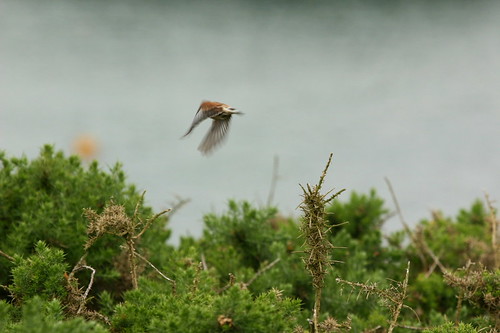
Linnet (Carduelis cannabina)

Not your classic bird pose this one, but I’ve always been interested in capturing pictures of birds at this stage of flight. Whether the slow power of larger birds as they beat the air into submission or that fizzing burst of energy which propels the littler ones, for me there’s something magical about freezing the action at the point when they actually defeat gravity.

Linnets used to be popular cage birds, the male having an intricate, and slightly ethereal twittering song, but thankfully that sort of thing doesn’t happen any more. Just as well as this is now listed as an RSPB red list species, breeding numbers having fallen significantly over the past 25 years in this country, as well as being a Species of European Conservation Concern.

Again its changes in farming practices which have so dramatically affected a bird which exploited non intensive arable practices. The increased use of herbicides and monocultural approaches to grassland ‘improvement’ have eliminated a lot of the seed rich native plants or ‘weeds’ as they’re often called. The widespread use of another monoculture, the increasingly widespread bane of hayfever sufferers, oil seed rape, has been beneficial during the summer, but the lack of stubble fields during the winter months has robbed them of habitat and food, when they need them most.

Just in case you’re not convinced about the ID of the blurry blob in the first picture, here’s the one I took fractionally before.
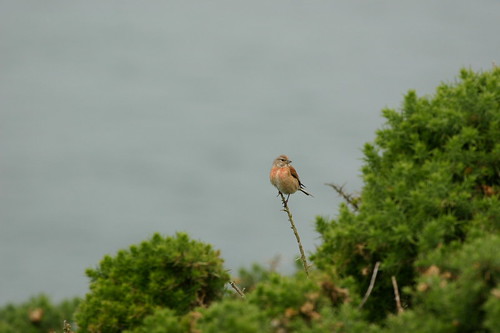
Nice, but not quite so much fun in my opinion.
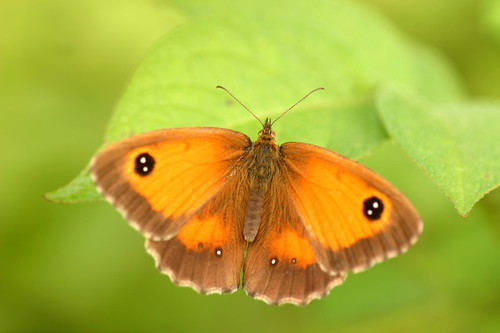
Gatekeeper (Pyronia tithonus)

A common butterfly almost anywhere shrubs meet rough grassland. Superficially pretty similar to the related Meadow Brown (Maniola jurtina) but a little smaller, with a larger amount of orange, particularly on the hindwings and having two white pupils instead of one in the forewing eyespots. This individual is a female, the males have a very obvious dark patch of scent scales on their forewing.

The larvae feed on grass species like Bents, Fescues, Meadow Grasses and Common Couch. The adults feed on the nectar from a wide variety of plants including Privet, and Thistles and Brambles so their ubiquity, to some extent ,must be related to their fairly catholic tastes.

The flight season is relatively short with adults having only one generation and being in flight from the second half of July up until the end of August. This is significantly less than M. jurtina which also only has one generation a year, but has a much greater flight period from mid June to late September.

Large Red Damselfly (Phyrrosoma nymphula)

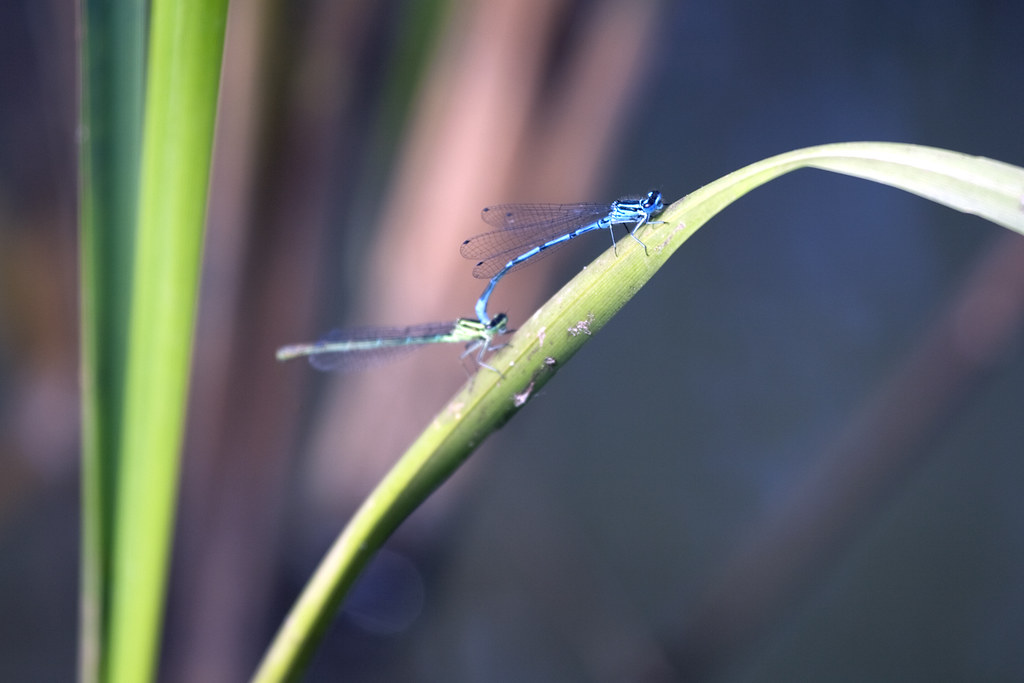
Although a common species, and the most likely ID if you see a red damselfly, this was the first time I’d seen any at our local pond.

Seeing two dragonflies or damselflies joined together in the above position is referred to as in tandem and contrary to popular belief isn’t actually mating. The male clasps the female in this manner, he’s at the front, both before and after the transfer of sperm, which happens when the female curves the tip of her abdomen underneath the male’s thorax. This position is called the copulation wheel and damselflies usually prefer to do it in a secluded position high in the trees or deep within bushes, so its rarely observed, whereas dragonflies are more brazen and some species will fly around openly ‘in cop‘.

On the same day I took this photo I also shot the HD video of Saturday’s One a Day species and used exactly the same camera for both – my Canon EOS 5D Mk 2. Isn’t modern technology amazing?

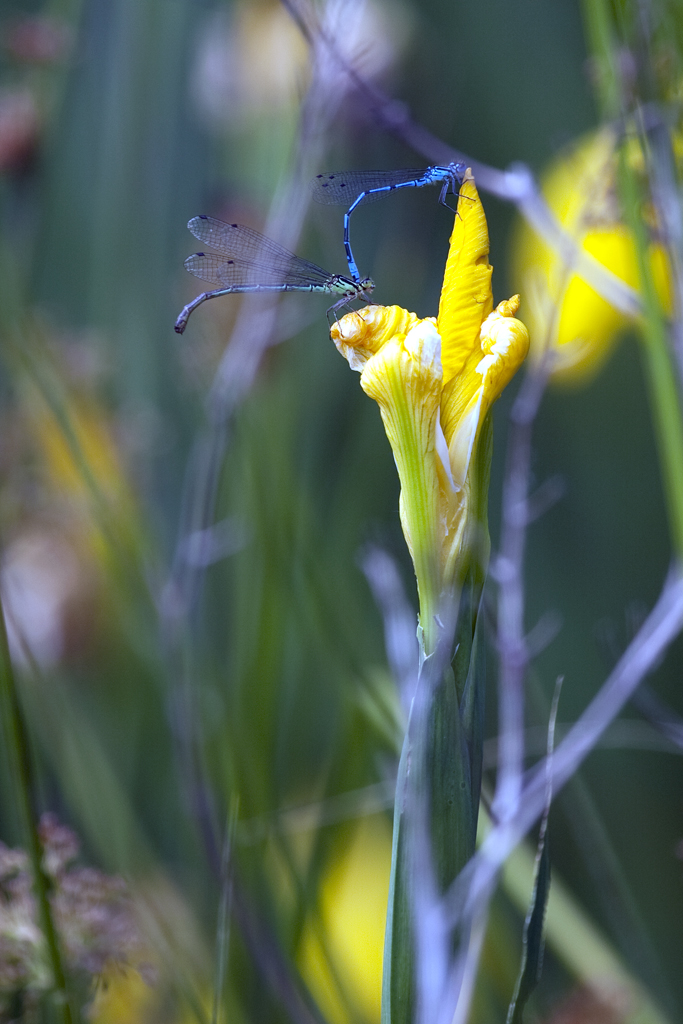
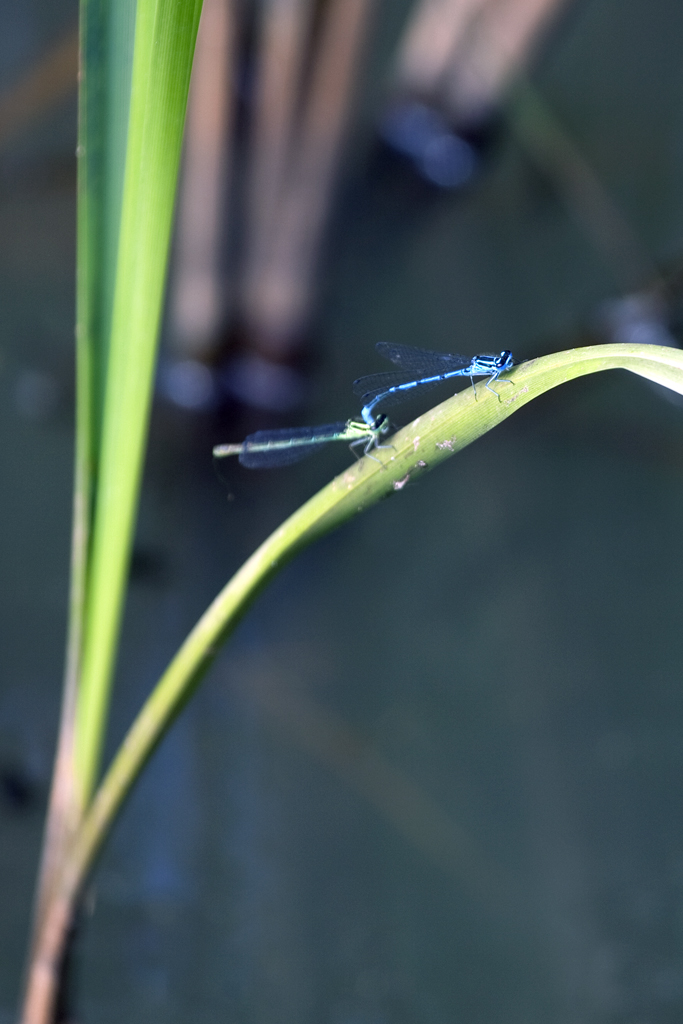
Here are a few other shots I took that day including yet another One a Day species in tandem.

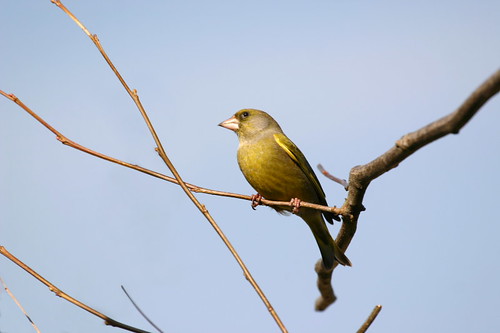
Greenfinch (Carduelis chloris)

A very familiar British garden species. On our bird feeders, they’re usually the ones going through the seed mix, eating the sunflower hearts and chucking the smaller stuff on the floor, much to the delight of the waiting hens.

They used to be birds of arable farmland but due to changes in farming practice, mainly the disappearance of stubble fields and less sympathetic hedgerow management, winter gardens have become an important food source.

The finch in my picture is a male, the female being browner and just a bit plainer looking and being photographed early in spring a few years ago, he’s looking his breeding best. The morning sun caught him rather well too as he eyed me cautiously from his newly budding perch, before beating a hasty retreat.

Broad Bodied Chaser (Libellula depressa)

A bit of a bumper Saturday night post, two species of the day for the price of one in full HD video!

The first part of this film features an earlier SOTD post the Azure Damselfly (Coenagrion puella) but the really good stuff in the second half features L. depressa the Broad Bodied Chaser, ovipositing (egg laying) in my local dragonfly pond.

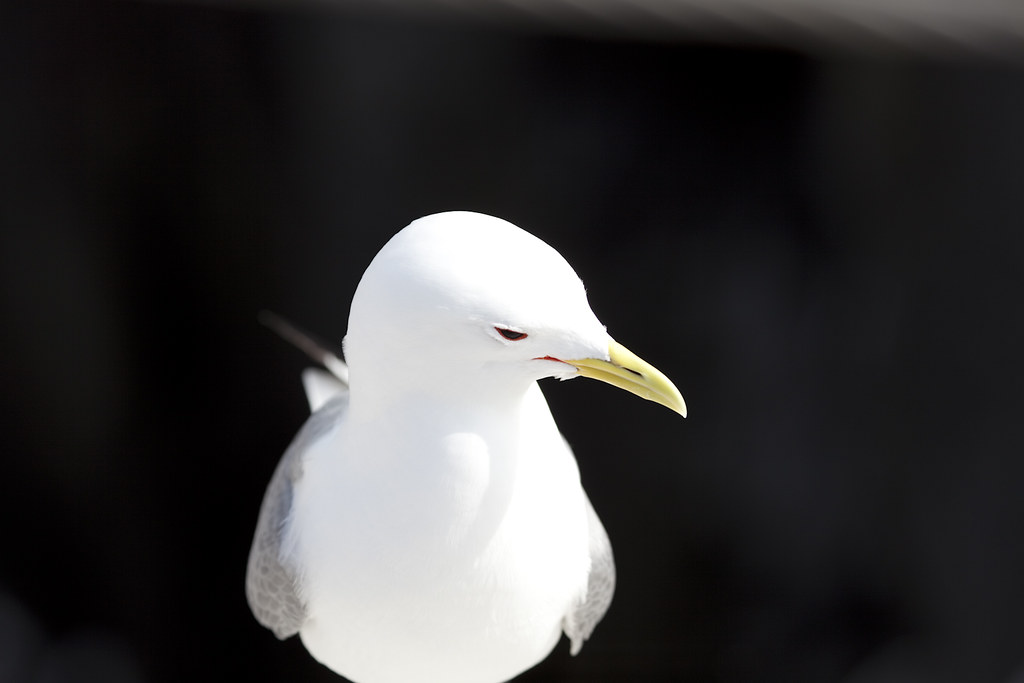
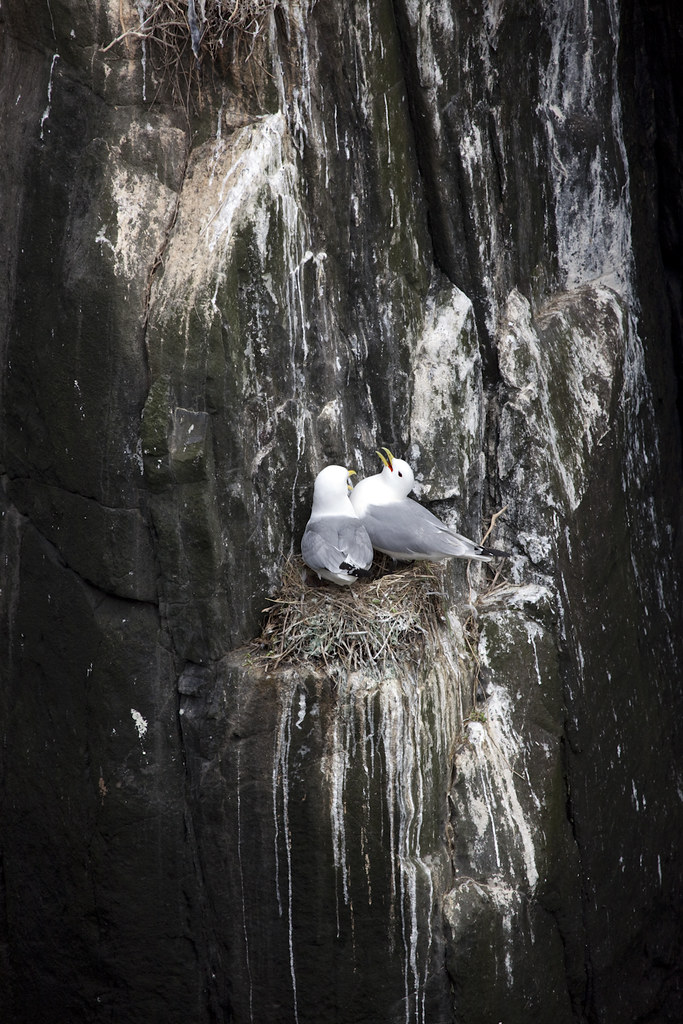
Kittiwake (Rissa tridactyla)

A small, perfectly formed gull. Unlike their heftier, noisier, cousins the Herring and Lesser Black Backed Gulls, Kittiwakes are only associated with coastal areas. You won’t find them chasing tractors or looting chicken dinner scraps from black bags on landfill sites. Instead, during the breeding season, they can be found in large, cliff ledge colonies but from August onwards they head back out to the Atlantic, where they spend the entire winter at sea.

This “spending the winter at sea” lark is something I’ve only just really started to wonder about. I’ve long accepted that auks like Puffins, Guillemots and Razorbills spend the winter at sea, but what can that actually mean? Surely being at sea during a storm is a bit hazardous, so apart from bobbing about like a cork, which I suppose may be quite a good defense, though probably not good for getting your full sleep quota, how on earth do these birds manage? If anyone out there has any ides I’d love to hear them. Google thus far isn’t shedding much light on the subject, but if I do find out, I’ll do a follow up.

A quick note about the first picture. Although the framing is at best a bit off, possibly the kind of view you’d get if it was bobbing on the sea, I find the intimacy of being able to see the fiddly little details intoxicating. The delicate blood red eye liner and gape line, alongside the faintest of white scallops defining the shape of the pale grey wing feathers, is deeply rewarding to me.

Portraits can’t always be totally perfect and if not, they won’t win the wildlife photographer of the year, but as long as they’re revealing, they’re doing they’re job in my book.

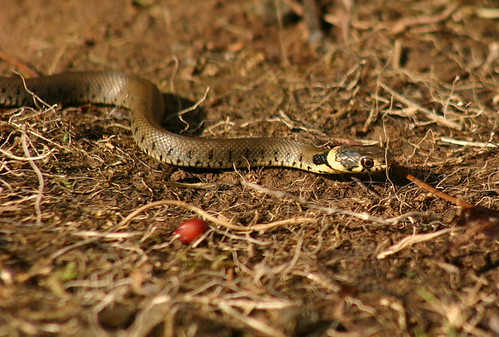
Grass Snake (Natrix natrix) – my favourite tautonym

So, tautonymy. The sharper among you will have spotted the scientific name -it shouldn’t be called the Latin name by the way as there’s a fair bit of Greek and other languages used throughout taxonomy, is the same word. Being a language spod as well as a natural history spod, well and a technology spod, hmm maybe just spod then, anyhoo, I really love tautonyms and Natrix natrix is a lovely sounding one.

On this occasion, as luck would have it, the scientific name’s derivation is from the Latin, nare ‘to swim,’ which refers to this species excellent aquatic abilities. The vast majority of a Grass Snake’s prey is amphibian and another of my species of the day tautonyms bufo bufo, features very highly on the menu – first person to give me the common name in the comment box below will win an exciting prize, probably.

This particular individual was a youngster, about 8 inches long and for some idea of scale the red blob in the foreground is a Yew berry.

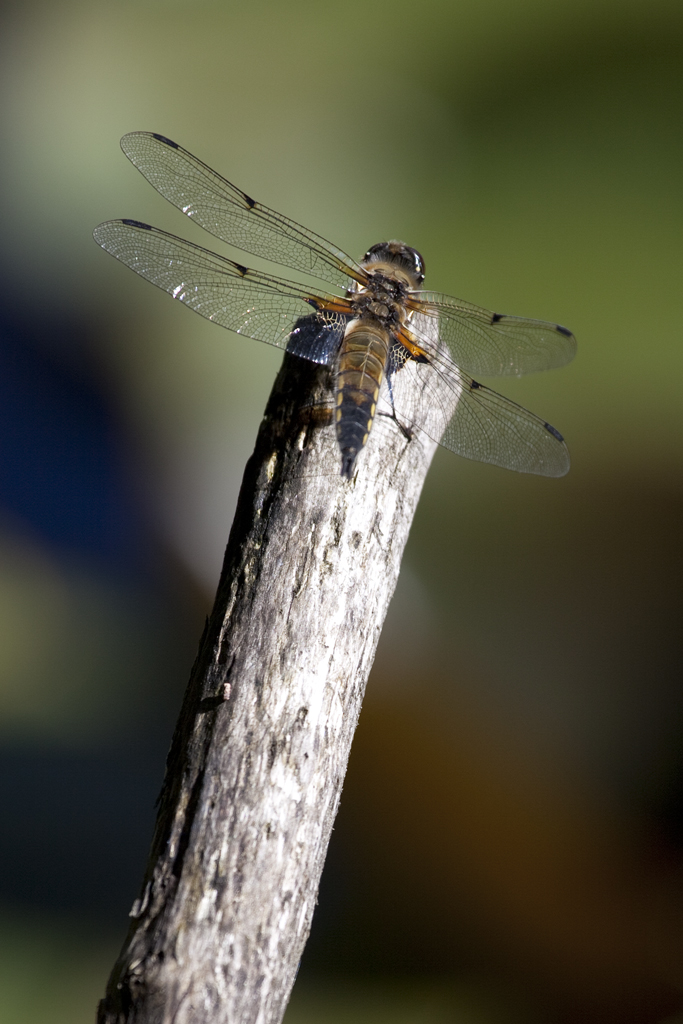
Four-spotted Chaser (Libellula quadrimaculata)

Although pretty familiar with fellow genus member Libellula depressa the Broad Bodied Chaser, which will soon feature in a fuller post, complete with HD video, this dragonfly was a new one on my species list. They’re not uncommon, but my regular dragonfly hunting ponds don’t suit them for some reason, so I was pleased to find plenty of these around a different local pond earlier this summer.

They’re pretty big insects, up to around 5cm and very active so quite easy to spot. They also have the habit of repeatedly returning to the same perch rather like Broad Bodied Chasers, which obviously helps the photographer. Unfortunately this individual kept returning to the end of the same stick in almost exactly the same position, so although I was able to get quite a few pictures, they were more or less identical. A little positional variety would have been nice and a macro lens would have been even nicer as this individual was far too intent on hunting small flies in the late afternoon sun to worry about me. Having no waders with me, I had to stick to the telephoto zoom lens as the favoured perch was a little too far into the boggy margin, but then that’s kind of why my wife bought me the zoom in the first place.

Field Grasshopper (Chorthippus brunneus)

We’ve left a few patches of longer grass around the garden this year, allowing it to mature and flower and I’m convinced this is part of the reason we’ve had such a bumper year for several insect species including C Brunneus.

Creating another more accessible habitat like this, alongside the more established wilder parts has been pretty rewarding, since by their very nature, the wilder areas are left to their own devices. By contrast, areas of longer grass are easy to rummage about in and provide cover for a wide variety of creatures from grasshoppers, beetles and crickets right up to birds and Rabbits. Toddlers are also pretty fond of them.

The familiar chirping of grasshoppers has been a welcome addition to our local sound scape. A truly evocative summer sound, produced by grasshopper stridulation by which a row of minute, evenly spaced pegs on the largest joint of the hindlegs is rubbed over the more prominent veins or ribs on the forewing.

Just a short post tonight as we’ve had a long weekend of traveling, all the way to Suffolk and back for a friend’s 40th birthday. A very late night, the first we’ve spent away from Joe, and the 400 miles mean I’m more than ready for a decent night’s sleep in our own, delicious bed.

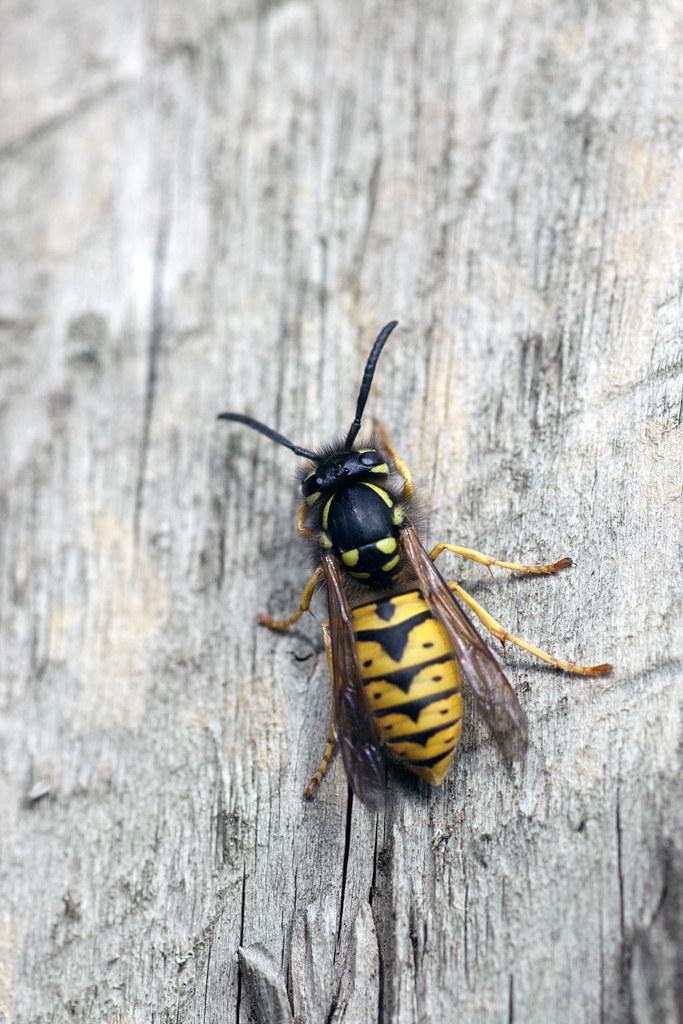
German Wasp (Vespula germanica)

Now at this time of year, I realise that this may be a risky statement but I love wasps and you should too.

The slightly aggressive, rather clumsy wasps you see in the autumn in the UK are a pale, stunted shadow of their former selves. Earlier in the year, the workers scour the area around their nest for insect prey to feed to the colony’s developing larvae. Gardeners should be particularly glad of the amount of grubs and caterpillars collected and consumed by this voracious army of sisters, for until late summer they’re all sterile female workers, born of a single queen.

All summer the workers either feed on flower nectar or ingest the juices from the meaty prey items they regurgitate to feed the larvae, in return the larvae secrete a super sweet saliva to reward the workers. Once the colony has matured, and there are no more larvae present, it’s this highly nutritious substance which they try to replace, whether it’s our food or drink, the sticky contents of our bins or the fruit in our orchards.

Ultimately, although they’re a nuisance, they’re really just a bit desperate, so waving your arms about or swatting at them just makes things worse. Try to be calm when they’re around and be observant of their habits and behaviour, then you should be able to stay sting free – you may even get to appreciate them for the interesting and beneficial insects they are.