April 19, 2026

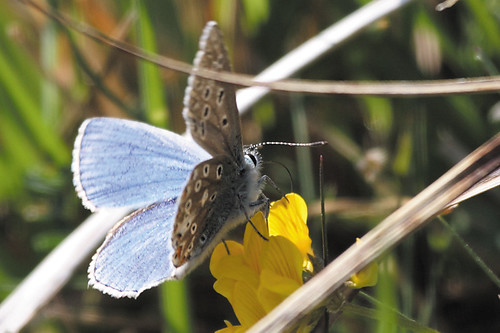
Common Blue (Polyommatus icarus)

Kind of a follow up to yesterday’s species and I’d obviously have preferred a female Common Blue for comparative purposes, but beggars can’t be choosers.

P. icarus is very common throughout almost all habitats in the UK and as such is pretty familiar to even the most casual urban butterfly spotter. Along with Large and Small Whites, Small Tortoiseshells and the odd Speckled Wood, they were a staple species for my earliest forays into lepidoptery.

This male is nectaring on Bird’s-foot-trefoil (Lotus corniculatus), who’s leaves are also the main food plant for this species’ larvae or caterpillars. This is a nice illustration of the inter-relationship between insect and plant because the trefoil itself benefits by being pollinated as the butterflies feed.

Brown Argus (Aricia agestis) or Common Blue?

Whilst taking some exciting macros of yesterdays Dragonfly species, I was briefly distracted by this butterfly.

I thought it was a female Common Blue (Polyommatus icarus), photographed it and got back to the Dragons, but when I got home and looked at the files on the big screen I started to wonder.

There’s more to ID-ing the Brown Argus than meets the eye. Mainly because the female Common Blue isn’t blue, she’s brown, mostly. Pretty sneaky eh? Of course, this cryptic colouration is not uncommon in the bird world, females often being dowdier than males, but it’s quite unusual among butterflies, except in the Lycanidea family, the Blues. To further confuse matters, the Brown Argus is also a Lycanid and so taxonomically at least, also a ‘Blue’.

Anyway, the crux of the ID relies on some fiddly little details on which I had intended to expound, but this would be a bit esoteric without some comparative shots of a female Common Blue. I don’t have any of those. I thought I did, but funnily enough, when I came to look at them in preparation for adding them to this post, I discovered that they too were of a female Brown Argus.

Instead I refer you to Steven Cheshire who has written a superb guide to identifying the two species, which can be downloaded from his excellent site www.britishbutterflies.co.uk. I’m indebted to him for this PDF as its helped me to add another insect to my species list and that’s always a good day, despite the fact that I’ve unwittingly already seen and photographed it!

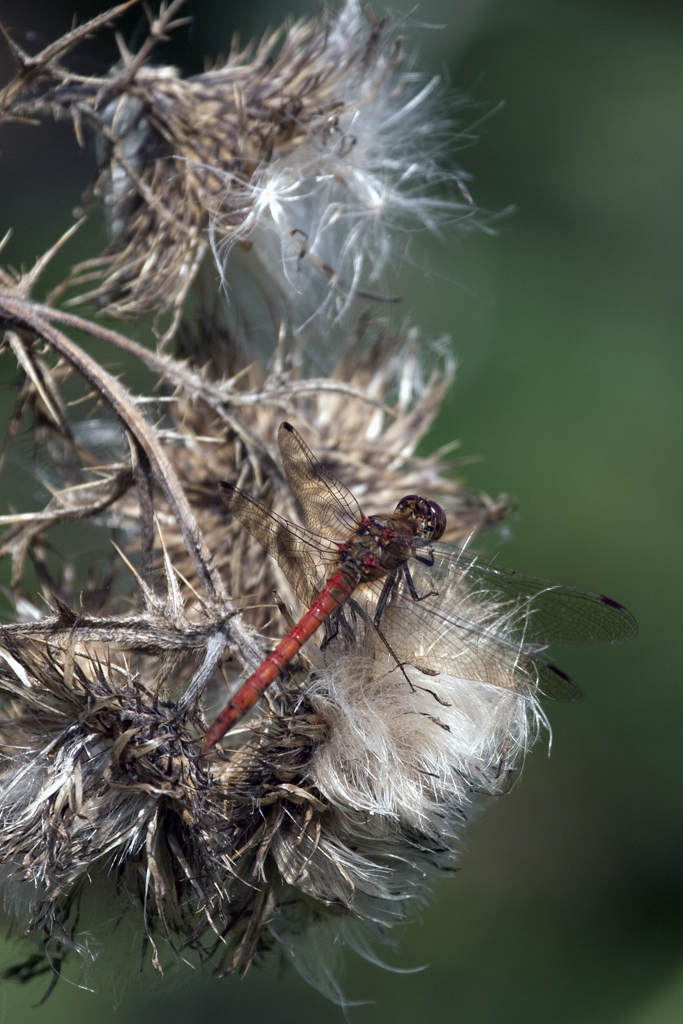
Common Darter (Sympetrum striolatum)

Continuing my series of Dragonflies and Damselfies, here’s the most often encountered species from the group of Darters.

I managed to spend a couple of hours at my local dragonfly spot early this afternoon, hoping to make the most of a brief sunny spell before the threatened rain and the continued onset of autumn. On the walk down, I was buzzed by a glorious looking Hawker racing along the hedgerow, swiftly followed by a less purposeful but equally un-photographable Darter. On arriving at the pond I set up the tripod and proceeded to be teased by a succession of Darters then cruelly mocked by a male Migrant Hawker (Aeshna mixta), who continually patrolled all around me, flatly refusing to land.

Thinking I’d try my luck away from the water as the females often only visit the pond to actually lay eggs, I wandered over to the bordering brambly scrub. I immediately spotted what I though was a female Common Blue butterfly feeding on some Ragwort and got a few shots. On closer inspection this evening and much head scratching, they’re hard to distinguish, this turned out to be a female Brown Argus (Aricia agestis) which was another new addition to my all taxa list. Excellent!

Whilst trying to photograph the future Argus, a Darter actually landed on my shoulder. Presumably to remind me what I was there for.

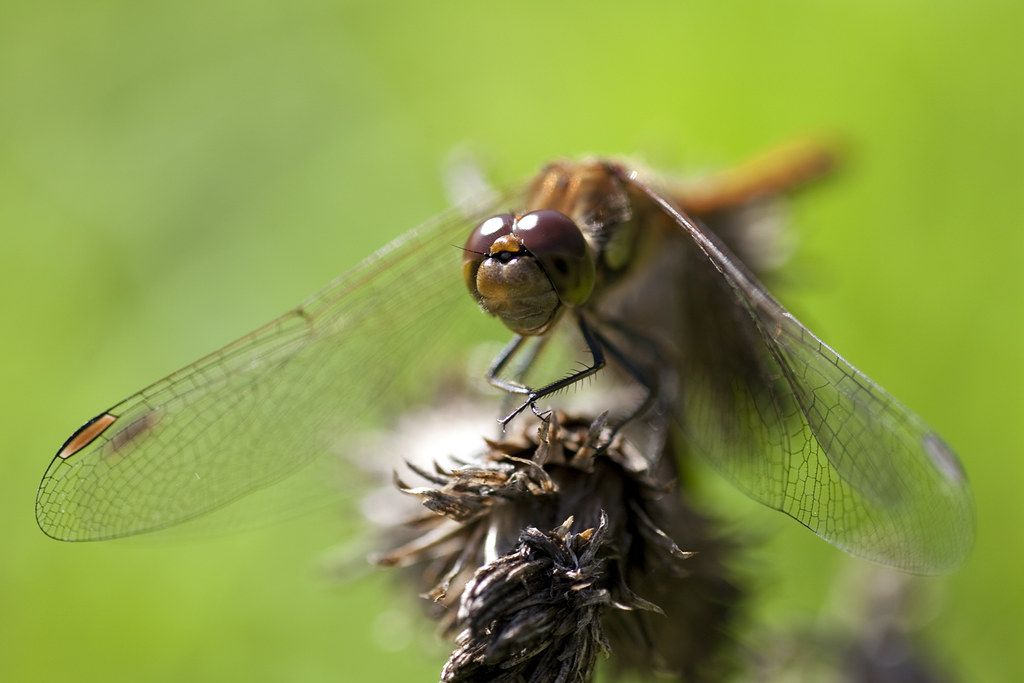
The first picture is a head on close up shot of a female Common Darter (S. striolatum). It turns out that this is a very useful angle for ID purposes because the ‘facial’ markings are a useful distinguishing characteristic.

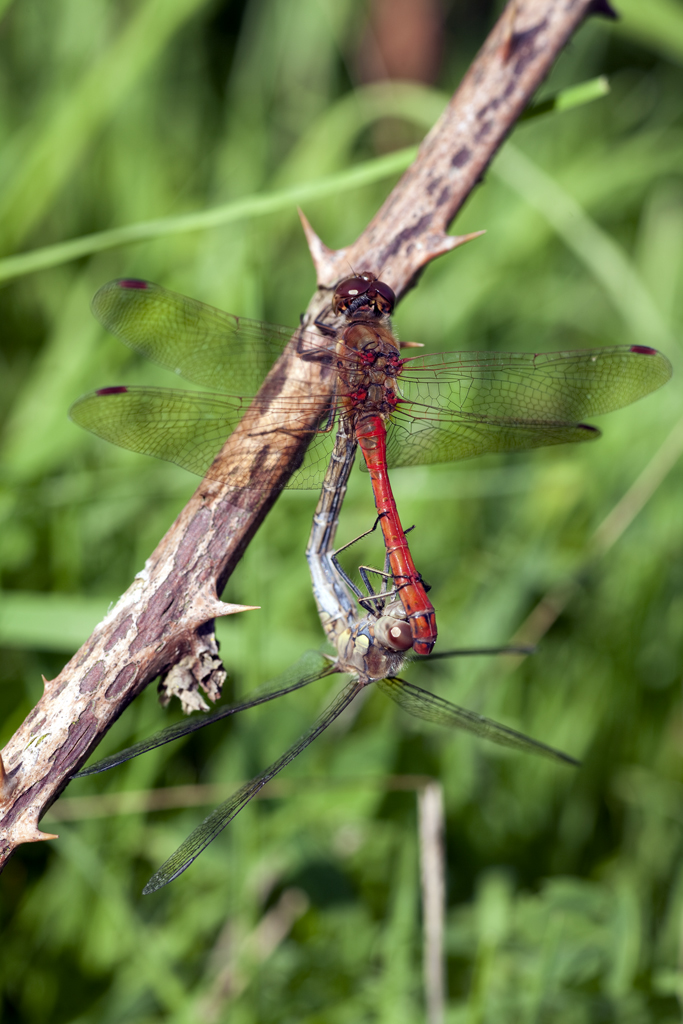
The second image is of the same species, but of a pair mating in the copulation wheel position. I think this picture this is actually genuinely brilliant as I’ve not even seen them in tandem before, let alone in cop, and to be able to get a really close up shot like this is a terrific insight into a pretty alien world -for me anyway.

Sparrowhawk (Accipiter nisus)

Seasonal post this one.

At this time of year the local Sparrowhawks make the most of the glut of inexperienced and deliciously nutritious recent fledgelings. I’ve never understood why people get upset about having these exquisite predators visit their gardens. They’re usually about as close as we get to genuine tip predators, those highly evolved specialists who sit at the top of the food chain, sharing their evolutionary niche with Polar Bears, Great White Sharks and Lions. Complaining that they take birds from a busy bird table is a bit like getting uptight about Orcas eating Sea Lions from a busy beach. Species necessarily coexist and the presence of predators in an ecosystem indicates that it’s healthy. If there aren’t enough resources lower down the food chain to feed everything else, then there won’t be anything to support those predators at the top.

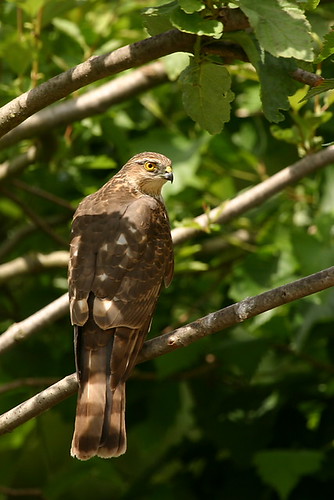
Twice this week, I’ve seen a female Sparrowhawk like the one in the photo below, catching birds in the garden. In all likelihood it’s this same female that I photographed a few years ago or at least a close relative, because they’re pretty short lived, the average lifespan being just 2.7 years.

Early on Tuesday morning I raised the bedroom blind and thought that although the weather had indeed taken an intemperate Autumnal turn, I definitely wasn’t expecting snow just yet. Large, fat, floaty flakes too. Then I noticed the alarm calls from the birds in the yew tree.

Trying to loop the blind cord round the stubby stanchion thingy, requires delicate figure of eight finesse, especially when trying to prevent a toddler getting tangled up in it. Eagerly scanning the garden for an anticipated raptor encounter hampers this. Eventually, and with the cord in a terrible mess, I spot the hawk. She’s on the lawn, covering her prey with self consciously flexed wings like a child afraid that someone’s going to copy her exam answers. All the while a sizable tree brimming with thrushes, finches and tits is venting their collective spleen, so pretty quickly she tires of the attention.

A forward lean and full smooth wing extension turns a crouch into an upward swoop.
Flight feathers flick dew from the wet grass, once, twice, three times.
The dead finch’s head metronomes each off beat, then she’s gone.

Badger (Meles meles)

In wistful mood. Had word today that a long lost friend is irretrievably so. Perhaps it’s this then that’s made me feel even more bleak about the coalition government’s proposed Badger cull.

It’s a sad turnout that in the international year of biodiversity, extermination is considered a cheap and easy solution to any problem.

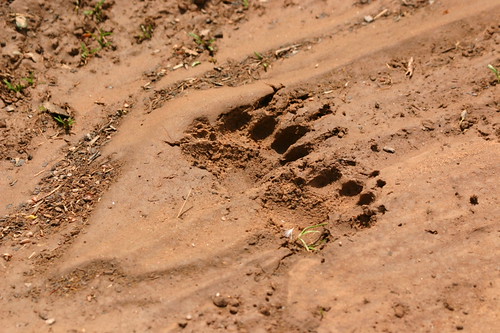
That’s enough politics, I’ll just let the picture do the talking, suffice it to say that I sincerely hope that this isn’t all that’s left of Brock in a few years time.

Linnet (Carduelis cannabina)

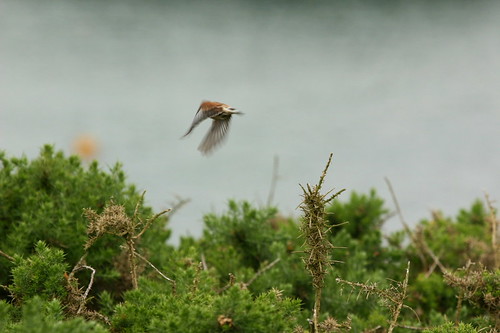
Not your classic bird pose this one, but I’ve always been interested in capturing pictures of birds at this stage of flight. Whether the slow power of larger birds as they beat the air into submission or that fizzing burst of energy which propels the littler ones, for me there’s something magical about freezing the action at the point when they actually defeat gravity.

Linnets used to be popular cage birds, the male having an intricate, and slightly ethereal twittering song, but thankfully that sort of thing doesn’t happen any more. Just as well as this is now listed as an RSPB red list species, breeding numbers having fallen significantly over the past 25 years in this country, as well as being a Species of European Conservation Concern.

Again its changes in farming practices which have so dramatically affected a bird which exploited non intensive arable practices. The increased use of herbicides and monocultural approaches to grassland ‘improvement’ have eliminated a lot of the seed rich native plants or ‘weeds’ as they’re often called. The widespread use of another monoculture, the increasingly widespread bane of hayfever sufferers, oil seed rape, has been beneficial during the summer, but the lack of stubble fields during the winter months has robbed them of habitat and food, when they need them most.

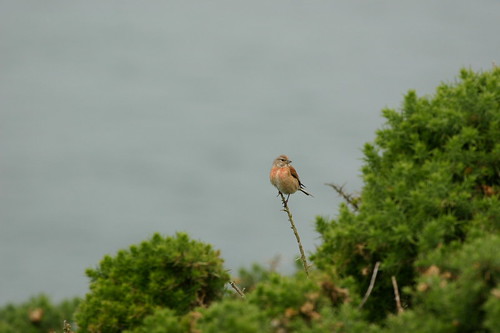
Just in case you’re not convinced about the ID of the blurry blob in the first picture, here’s the one I took fractionally before.

Nice, but not quite so much fun in my opinion.

Gatekeeper (Pyronia tithonus)

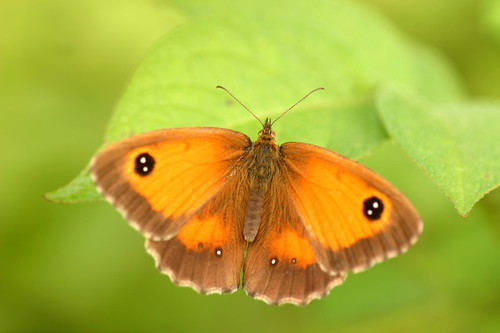
A common butterfly almost anywhere shrubs meet rough grassland. Superficially pretty similar to the related Meadow Brown (Maniola jurtina) but a little smaller, with a larger amount of orange, particularly on the hindwings and having two white pupils instead of one in the forewing eyespots. This individual is a female, the males have a very obvious dark patch of scent scales on their forewing.

The larvae feed on grass species like Bents, Fescues, Meadow Grasses and Common Couch. The adults feed on the nectar from a wide variety of plants including Privet, and Thistles and Brambles so their ubiquity, to some extent ,must be related to their fairly catholic tastes.

The flight season is relatively short with adults having only one generation and being in flight from the second half of July up until the end of August. This is significantly less than M. jurtina which also only has one generation a year, but has a much greater flight period from mid June to late September.

Large Red Damselfly (Phyrrosoma nymphula)

Although a common species, and the most likely ID if you see a red damselfly, this was the first time I’d seen any at our local pond.

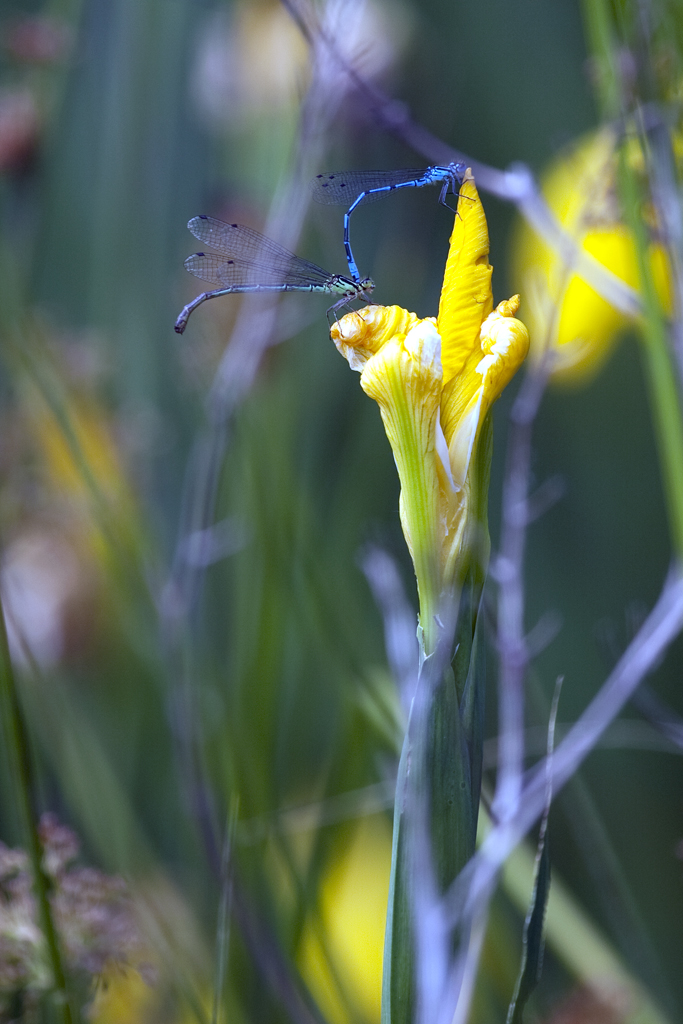
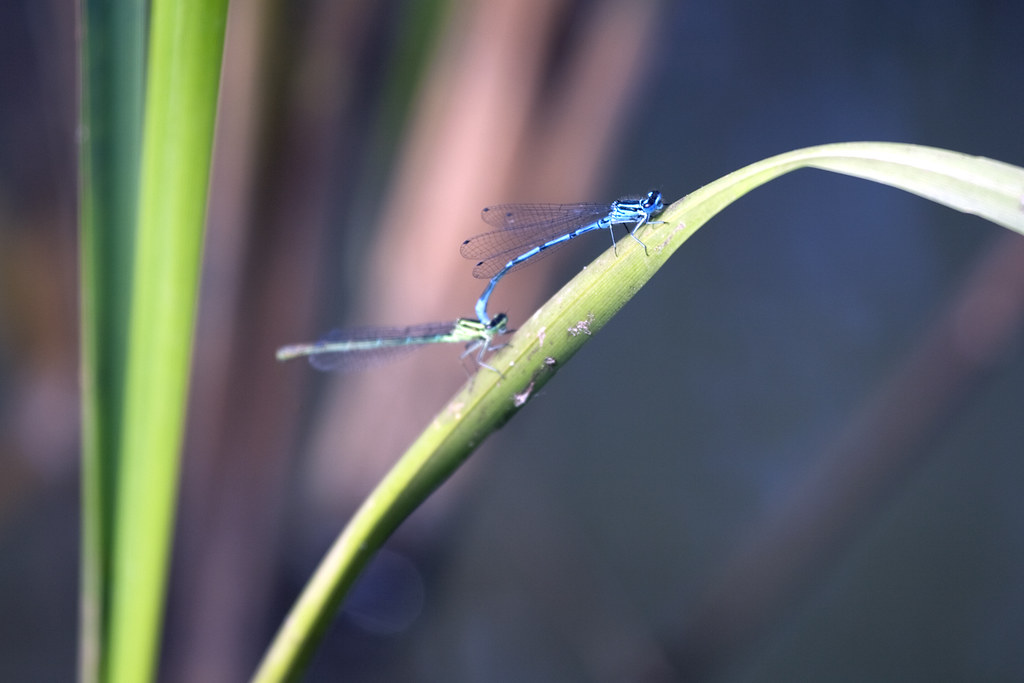
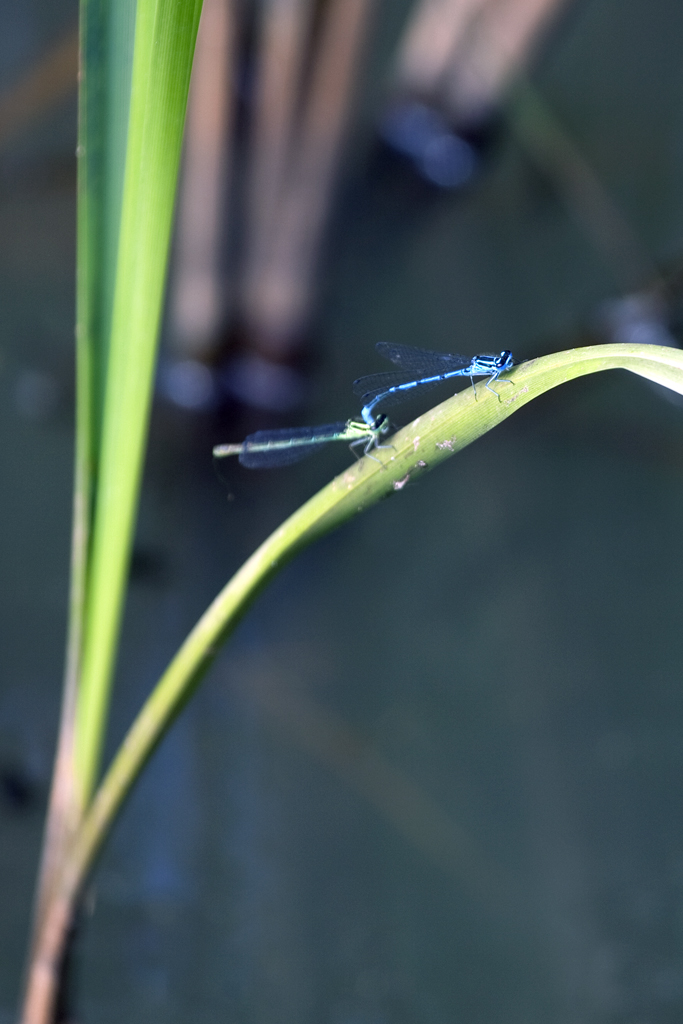
Seeing two dragonflies or damselflies joined together in the above position is referred to as in tandem and contrary to popular belief isn’t actually mating. The male clasps the female in this manner, he’s at the front, both before and after the transfer of sperm, which happens when the female curves the tip of her abdomen underneath the male’s thorax. This position is called the copulation wheel and damselflies usually prefer to do it in a secluded position high in the trees or deep within bushes, so its rarely observed, whereas dragonflies are more brazen and some species will fly around openly ‘in cop‘.

On the same day I took this photo I also shot the HD video of Saturday’s One a Day species and used exactly the same camera for both – my Canon EOS 5D Mk 2. Isn’t modern technology amazing?

Here are a few other shots I took that day including yet another One a Day species in tandem.

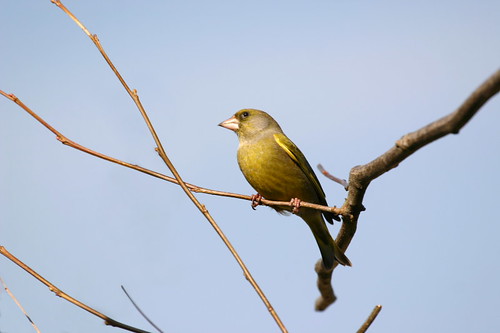
Greenfinch (Carduelis chloris)

A very familiar British garden species. On our bird feeders, they’re usually the ones going through the seed mix, eating the sunflower hearts and chucking the smaller stuff on the floor, much to the delight of the waiting hens.

They used to be birds of arable farmland but due to changes in farming practice, mainly the disappearance of stubble fields and less sympathetic hedgerow management, winter gardens have become an important food source.

The finch in my picture is a male, the female being browner and just a bit plainer looking and being photographed early in spring a few years ago, he’s looking his breeding best. The morning sun caught him rather well too as he eyed me cautiously from his newly budding perch, before beating a hasty retreat.

Broad Bodied Chaser (Libellula depressa)

A bit of a bumper Saturday night post, two species of the day for the price of one in full HD video!

The first part of this film features an earlier SOTD post the Azure Damselfly (Coenagrion puella) but the really good stuff in the second half features L. depressa the Broad Bodied Chaser, ovipositing (egg laying) in my local dragonfly pond.