New Video Blog Post: Nesting Robins (Erithacus rubecula) #eggwatch
Nesting Robins (Erithacus rubecula)
May 3, 2011 by
So far this year we’ve been having a bit of a bumper year for nests.
Starlings have returned to last years penthouse suite above our bedroom window, the Moorhens who share our hen’s food successfully incubated 5 eggs, Blackbirds are again nesting in my lean to shed, House Sparrows are nesting in both our roof and that of our closest neighbour and the neighbours on the other side have Swallows building a nest in their car port. Its safe to say that spring has most definitely sprung.
Pride of place in this nest-a-thon must go to the robins though who thoughtfully built their nest at just below eye height in the ivy which holds our coal shed together. Here’s a short edit of some footage I shot with my DSLR and Camcorder, which would be much better if the lighting was consistent throughout 🙂
First Cockchafer beetles (Melo…
April 20, 2011 by
First Cockchafer beetles (Melolontha melolontha) tapping on the windows tonight – pretty early for May Bugs isn’t it? #ukspring #phenology
‘Greenest government ever’ wan…
April 20, 2011 by
‘Greenest government ever’ wants to scrap ‘Red Tape’ laws protecting wildlife, countryside & environment.Petition them:
Just set up my new and very sl…
April 19, 2011 by
Just set up my new and very slick Android 3 powered Motorola Xoom tablet. Very impressed so far and already able to view Flash content 🙂
Slime Mould (Reticularia lycoperdon)
April 15, 2011 by
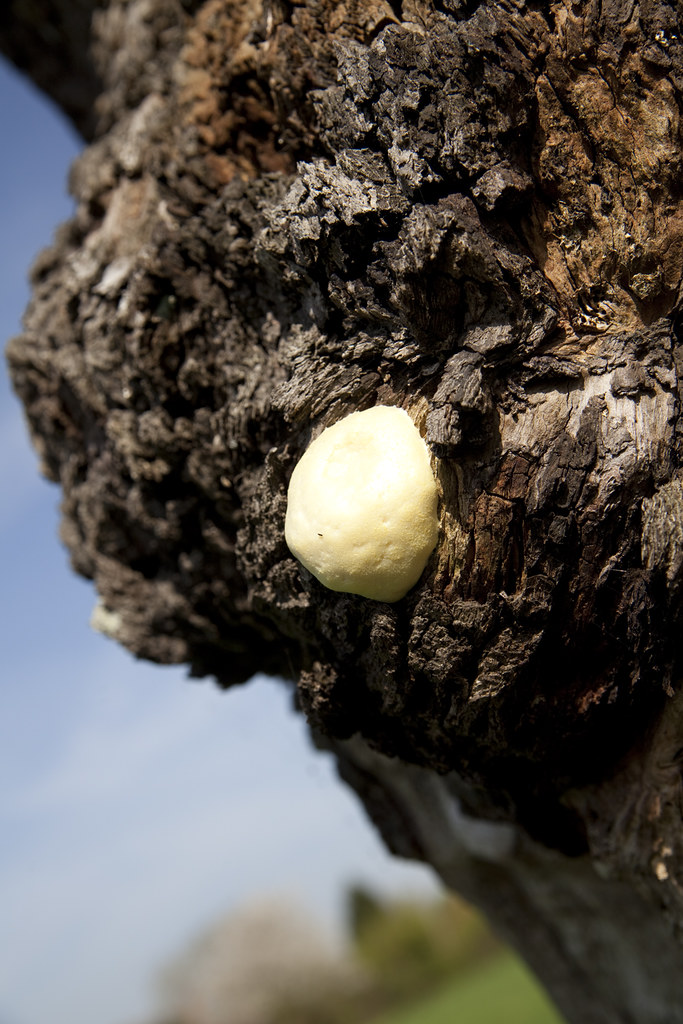
A very odd species which looked exactly like the expanding foam used in cavity wall insulation oozing from the bark of a very old and recently dead perry pear tree.
Thanks to user Fenwickfield at iSpot I now know that this is Slime Mould Reticularia lycoperdon previously classified as Enteridium lycoperdon. Slime Moulds are a strange class of amoeboid protozoa, previously thought to be fungi but now known to be Myxomycota, which are organisms which prey on microbial food webs. This particular species is a bacterial predator and usually very tiny and unlikely to be seen, but this particular stage of it’s life cycle is a fruiting body known as a sporangium. This is a globular formation which swells up to around 50-80mm (this was near to the top end of that scale), whereupon it hardens and then eventually splits to release brown mass of spores.
I’ll try to return and take a few more pictures to illustrate more fully.
Wood Pigeon, Blue Tit & Robins…
April 9, 2011 by
Wood Pigeon, Blue Tit & Robins’ nests all spotted whilst spending a fantastic afternoon in the back garden #eggwatch First Swallows too.
New Blog Post – Even more Wild…
April 7, 2011 by
New Blog Post – Even more Wild Daffodils http://ow.ly/4v9fz


 Twitter
 Flickr
 Delicious